Saturday, December 31, 2022

WHERE TO FIND WINTER'S WONDERS

WHERE TO FIND WINTER'S WONDERS


Hibernation is for big, ol’ hairy bears—NOT humans.  Bundle up and head outside to discover winter's wonders!


It's downright easy to spy our hometown bald eagles nesting in leaf-bare sycamores and other mammoth trees.  And you might catch a sly red fox prancing through your neighborhood searching for his Valentine.  Their breeding season peaks in late January.  If you peer a bit more closely, you can also eyeball our many other winter visitors, like perky ruby-crowned kinglets popping up their crowns as these curious critters land near you to say hello.  And if you learn where to look, your eyes will reveal one of our planet's wackiest wildflowers, self-heated
skunk cabbage that resembles a curvy chartreuse and plum-colored Georgia O’Keefe painting on the outside and a coronavirus-like ball on the inside during its flowering stage.  (Hint: They thrive by mucky creeks.)  These brumal miracles could even transform a winter loather into a winter lover.  
 

Gobs of "snowbirds" choose Virginia as their Miami Beach.  As a wildlife photographer, my personal favorites include yellow-bellied sapsuckers (no, they aren't cartoon characters), white-throated sparrows (they sometimes sound like computers), golden-crowned kinglets, and dark-eyed Juncos.  I also adore wintering waterfowl like canvasback ducks with vampire-red eyes, ballerina-beautiful tundra swans, chunky snow geese, and feisty American wigeon ducks with green-striped heads and squeaky voices.


You can find the general location of these birds with Cornell University's free eBird website and mobile app and use it to alert you to rarities, like teensy but tough rufous hummingbirds, which are increasingly more common winter wanderers.  You can pinpoint birds, critters, and plants with the iNaturalist's free citizen-science website and mobile app by National Geographic and the California Academy of Sciences.


You’ll know you’ve stumbled upon a sapsucker if you hear a nasal mewing and spot trees with rectangular "patches" in the bark or perfect rows of deep round holes. 

Itsy-bitsy golden-crowned kinglets might flit down beside you to show off their sunflower-yellow crests.  These and many other birds hang out in forests and at the forest's edge, especially when it bumps into a meadow.  It doesn’t hurt if there’s a creek, a waterfall, a bird bath, or another water source nearby.  In Northern Virginia and throughout the DMV (DC, Maryland, and Virginia), you’re never more than a mile from a “birdy” park or other public land.  Winter ducks—including scaup, ruddy, gadwall, northern shoveler, green-winged Teal, and ring-neck—even promenade around the pond at Constitution Gardens on the National Mall near the U.S.  Capitol.  And as long as you're crossing the Potomac River, head to Gunner's Lake in Germantown for a cornucopia of dazzling ducks.


In the DMV, eagles and owls both nest during the winter.  You might notice Ma and Pa Eagle flying in new branches to spiff up their massive nests in early winter and sitting on their eggs by February.  Both of these big nesters live along the Potomac River in Arlington near Spout Run and at Alexandria's Dyke Marsh Wildlife Preserve.  To find dozens of eagles in Northern Virginia, consult the unparalleled Center for Conservation Biology’s eagle nest map.  Just don’t venture closer than 660 feet to an active nest or the feds might swoop down to bust you since eagles are highly protected by federal laws.  


Owls aren't quite as easy to detect.  But at Dyke Marsh, you might glimpse barred owls "honeymooning" in the winter.  Babies come a bit later.  Depending on the weather, Virginia’s great horned owls typically hatch by late winter or early spring.  They have recently nested at Fort C.  F.  Smith Park in Arlington and at Occoquan Bay National Wildlife Refuge in Woodbridge.


Barred owls also parade around "must-see" Huntley Meadows Park.  In the winter the owls are joined by their country cousins, pint-sized brown creepers (with two-toned curved beaks) that spiral upward around tree trunks.  Northern Pintail ducks dabble for dinner along the boardwalk of Huntley's locally famous wetland.  If you’re lucky, you might spy a common muskrat chomping on its leafy green lunch or a frisky northern river otter.  Visit late in the day if you're eager for beavers.  In late February and early March, American woodcocks with beaks like Pinocchio's lure mates with buzzing songs and spiral “sky dances.”


Some parks, like Ellanor C.  Lawrence Park in Chantilly, hang bird feeders, which make it even easier to gawk at beautiful birds close-up.  And Arlington's Long Branch Nature Center is now likely the most dependable place in the United States to see southern flying squirrels up close.  They offer a few public squirrel programs during the winter.


But you don’t have to visit those hotspots for birds, blooms, or beasts.  Just trek anywhere along the thousands of miles of public trails in the DMV.  Stop often to look and listen for sights (especially movement) and sounds of life.  You might encounter rascally raccoons, acrobatic eastern gray squirrels (and maybe some albinos and black morphs), white-tailed deer, and perhaps even a Virginia opossum, with a whopping 50 teeth, the most teeth of any wild mammal in North America and North America’s sole marsupial with a kangaroo-like pouch.  By late winter, you may hear the deafening, high-pitched wailing from a hidden brigade of thumbnail-sized spring peeper frogs introducing themselves to their mates.  


Besides just evergreen trees and shrubs, Virginia’s forests are splattered with other greenery all winter.  Clumps of American mistletoe cling to bare trees.  This parasitic plant's white berries may poison humans but yield a yummy snack for cedar waxwings, woodpeckers, and other birds.  Tropical-looking Christmas ferns spill over rocks with dark emerald green fronds.  Plant-like lichens light up trees and boulders with a light-green, yellow-green, and green-gray palette.  Clubmosses form a spongy green oasis on the ground suitable for leprechauns and other fairies.  Invasive vines, such as English ivy, wind their way up trees.  The birds and critters that find them a snuggly, warm hideaway don't know that the gnarly


vines are choking the trees to death.  Pint-sized partridge-berry plants (a Virginia Native Plant Society “Wildflower of the Year”) and spotted wintergreen plants also decorate the drab dirt.  Summer-blooming cranefly orchids stand out in the khaki and brown landscape with two-tone leaves -- green on top and cranberry-colored underneath.


Native and non-native flowers, berry-like drupes (fruits), and seeds also brighten the winter woods and gardens.  You can find little white snow drops spreading along the ground, sunshine-yellow leatherleaf mahonia, canary-yellow winter jasmine, spiky apricot-colored and pale-yellow witch hazel flowers, and ivory and pink hellebores.  The birds will help point out their fave eye-candy seeds and drupes, like brick-red staghorn sumac, sometimes spotted with a woodpecker dangling underneath.  Humans won't need help finding the shiny-red "berries" (drupes) of American holly, beaming purple beautyberry, salmon-colored coralberry, regal-red winterberry, red-orange coral honeysuckle, and rosy-red rose hips from Virginia’s native swamp rose.  


And don't forget to look in your own backyard for wintry wonders.  You'll likely find a super-model bird: a fiery-red male Northern cardinal with an orange beak, a kinetic crest, and a black Zorro mask.  Cardinals are considered one of the most beautiful birds in the entire world.  These living ornaments, which often adorn Christmas cards, are one of our America's—and Virginia's—most cherished winter wonders.  


So, grab your cardinal-red scarf and gloves and go exploring for your own winter wonders.  The only thing you likely won't stumble upon is a big ol' hairy bear!


###


Black Bear with Cub


Albino Northern Gray Squirrel

Albino Northern Gray Squirrel

Black Morph Northern Gray Squirrel

Male Canvasback Duck


Male Northern Cardinal

Male Northern Cardinal in American Holly

Common Muskrat

Downy Woodpecker Eating Poison Ivy Berries

Bald Eagle Flying with a Fish

Bald Eagles Nesting

Southern Flying Squirrel Duo

Southern Flying Squirrel
Eating Native Hazel Nut

Red Fox Yawning

Great Horned Owl

Male Dark-Eyed Junco

Male Northern Cardinal in the Snow

Mistletoe in the Snow

Virginia Opossum

Juvenile Virginia Opossum Baring Teeth
North American River Otter

Male Ruby-Crowned Kinglet Raising Crown


Saturday, December 24, 2022


                   BEWITCHING 
      BIRDS, BLOOMS, & BEASTS 
               EXHIBIT CAN HELP 
            CHANGE THE WORLD


FOR IMMEDIATE RELEASE


Barbara Saffir, 571-449-0445, Barb22030@yahoo.com

https://www.NaturePhotographyDcMdVa.com


Group wildlife and nature photography exhibit 

to benefit historic Green Spring Gardens. 


"Nature photos can help change the world," says wildlife photographer Barbara J. Saffir, founder of Nature Photography DC/MD/VA.  "I hope that the images in our group wildlife conservation photography exhibit will inspire countless others -- including lawmakers -- to fall fervently in love with earth's finite treasures so they'll work passionately to protect them."


"Birds, Blooms, & Beasts" features perky puffins, picturesque sunflowers, powerful elephants and nearly three dozen other images from DC, Maryland, Virginia, and around the globe by Saffir and seven jet-setting photographers from Nature Photography DC/MD/VA.  Sales will help benefit historic Green Spring Gardens, a "must-see" four-seasons Fairfax County, VA park.  All photos are for sale  just in time for the holidays! The Friends of Green Spring nonprofit receives 30 percent of each sale.


SHOW DATES:          Dec. 13, 2022 - Feb. 5, 2023 

                                     Monday to Saturday, 9 a.m. - 4:30 p.m. and 

                                     Sunday, noon - 4:30 p.m.


RECEPTION DATE:   Dec. 18, 1 - 3 p.m., 

                                      Meet the Photographers Reception  


WHERE:                     Green Spring Gardens Horticulture Center

                                      4603 Green Spring Rd., Alexandria, VA

                                      703-642-5173, 

                                      parkmail@fairfaxcounty.gov


    http://www.friendsofgreenspring.org/programs-a-events/art-shows

     https://www.fairfaxcounty.gov/parks/green-spring/


NOTE: Please call Green Spring at 703-642-5173 to be sure the exhibit is available for viewing because venues are sometimes unavailable due to other park activities.  Green Spring Gardens' "Art In The Garden" program is sponsored by the Friends of Green Spring.


###


Thursday, November 3, 2022

WILDLIFE PHOTOGRAPHY EXHIBIT

* NOV. 1, 2022 to APRIL 30, 2023


BIRDS & BEASTS @ BROOKSIDE 


Eyeball a trio of colorful box turtles, a duo of lanky ratsnakes, and other beautiful beasts at Brookside Nature Center while enjoying some amazing print images of other beasts and birds by award-winning photographer and master naturalist Barbara Saffir. Eleven of her photos are on display from Nov. 1 to April 30 as part of Brookside's new program to exhibit work by local artists and photographers. Brookside Nature Center is adjacent to acclaimed Brookside Gardens in Wheaton Regional Park. 


Brookside Nature Center, 1400 Glenallan Ave., Wheaton, MD, 301-962-1480. Open Tuesday through Friday, 10 a.m. - 5 p.m. and weekends, 1 p.m. - 5 p.m.  https://montgomeryparks.org/parks-and-trails/brookside-nature-center/ 


Wildlife Photographer Barbara Saffir

https://www.barbarajoansaffir.com


Monday, September 12, 2022

ROOSEVELT ISLAND NATURAL HISTORY HIKE

BIRDS, BLOOMS, BEASTS, & THE BULL MOOSE: A Natural History Hike on Roosevelt Island For Cultural Tourism, DC's WalkingTown DC tours. Register here: https://www.culturaltourismdc.org/portal/walkingtown-dc

Monday, June 27, 2022

TWO UPCOMING PHOTO TALKS!

Summer's Bounty: Birds, Blooms, Beasts, & Babies -- When and where to spot them in the Mid-Atlantic

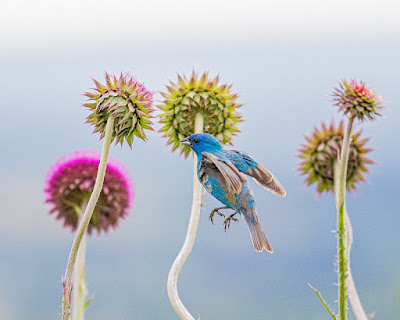
Discover when and where to find some of the Mid-Atlantic's summer nature bounty, including electric-blue birds atop crayon-yellow sunflowers; itsy-bitsy green treefrogs with racing stripes and sticky toes; bedazzling bugs; backyard squirrels that “fly;” and a sea of native lotus blossoms, worthy of Monet.

https://anshome.org/naturalist-hour/

7/14, 7 p.m. : AUDUBON NATURALIST SOCIETY (Zoom. Registration required. $10 benefits ANS.)


Nature and Wildlife Photography: How to Hunt with Your Camera


Wildlife photographer and Virginia Master Naturalist Barbara Saffir will show her stunning wildlife photographs and talk about how you can learn to capture amazing shots with your camera in the DMV. 

https://librarycalendar.fairfaxcounty.gov/event/9196262

8/2, 6:30-7:30: CHANTILLY REGIONAL LIBRARY (In person. No pre-registration required. Free.)


- - - - - - - - - - - - - - - - - - - - - - - - - - - - - - - - - - - - - - - - - - - - - - - - - - - - - - - - - - - - - - - - - - - - - - - - - - - - - 

Friday, May 27, 2022

 HOW TO INVITE HUMMINGBIRDS 
TO YOUR BACKYARD


Photos and Story by Barbara J. Saffir
 
THEY'RE BAAAACCCCCKKK!  Flying fairies -- ruby-throated hummingbirds -- returned to Virginia in April so now it's time to invite some to your house or apartment.  It's easy and cheap.  Just serve up some irresistible food and an inviting home.  That means a clean hummer feeder, native plants, and nearby trees for them to eat, nest, and snuggle in.  A water source is a huge plus for all birds and critters, especially to help them survive summer's searing heat.  And it's also paramount to avoid insecticides in your yard since bugs are the main course and high-octane fuel for these feisty, flying jewels that can beat their wings about 53 times each second, according to Cornell's respected "All About Birds" website.  Ruby-throats are the only hummers that nest east of the Mississippi.
 
First the FLOWERS.  Even if you can’t plant salvia, cardinal flower, bee balm, coral honeysuckle, trumpet vine, or other hummer-magnets in time, or if you live in an apartment with a pint-sized balcony, you can still buy them in containers.  It's best to place them near your hummingbird feeders so they can slurp some sugar water for desert after gobbling down their bug buffet.  Cornell says they especially love the bugs that humans sometimes hate, including disease-carrying mosquitoes, gnats, fruit flies, small bees, and spiders.  And your local big box store is NOT the ideal place to buy hummer plants. Native plant nurseries appear to be the best sources for hummer-preferred flowers.  When you go shopping, if you can, chose the plants with butterflies or hummers already feeding from them. And gobs of other wildflowers and flowering trees seduce hummingbirds, not just the ones you typically hear about.  Virginia Tech offers some suggestions below. 
 
Second, the FEEDERS.  All you need is a $4 hummingbird feeder (see below) and some plain white granulated sugar.  But NEVER hang any hummingbird feeders unless you're willing to clean them every couple of days in the heat because dirty ones can form mold, fungus, bacteria, and fermentation, which can hurt or kill your hummers.  The National Wildlife Federation says you need to refill the nectar "as often as every two days when summer temperatures remain above 90 degrees F.  Rinse the feeder thoroughly—without soap—before refilling. Clean it once a month with a very mild, diluted bleach solution."  It also helps to hang the feeders from a ($4 and up) ant moat to prevent ants from monopolizing the nectar.
 
Don't add anything to Audubon's standard nectar recipe: "The best (and least expensive) solution for your feeder is a 1:4 solution of refined white sugar to tap water. That’s ¼ cup of sugar in 1 cup of water. Bring the solution to a boil, then let it cool before filling the feeder."
 
Lastly, don't forget the water. Hummers love WATER but ordinary bird baths are too big for little ruby-throats, which only reach 3.7 inches long and weigh 0.1-0.2 ounces, roughly the weight of a penny.  Instead, they love to take showers in misting sprinklers and they sometimes flock to bubbling fountains, says "The Spruce" website. 
 
Male hummers (only adult males have full red throats and they only appear red in the sun due to the feather structure) start to return to Florida and Central America by August. But keep your feeders up through October because some young males and females are hungry stragglers. And when autumn rolls around, offer orange jewelweed wildflowers to your hummers.  If you can't wrangle up a supply, just stroll along the W&OD Trail by Hunter Mill Road or any other trail or garden with lush jewelweed and if you listen and watch carefully, I almost guarantee that you can find some happy hummingbirds. 
 
TIP SHEETS:
 
AUDUBON'S HUMMINGBIRD FEEDER TIPS:
https://www.audubon.org/news/hummingbird-feeding-faqs
 
CORNELL UNIVERSITY'S GUIDE TO RUBY-THROATED HUMMINGBIRDS:
https://www.allaboutbirds.org/guide/Ruby-throated_Hummingbird/overview#
 
FIRST NATURE $4 HUMMINGBIRD FEEDER:
https://www.walmart.com/ip/First-Nature-Hummingbird-Feeder-16-oz/22889949?wmlspartner=wlpa&selectedSellerId=0&wl13=5880&adid=2222222227722889949_117755028669_12420145346&wmlspartner=wmtlabs&wl0=&wl1=g&wl2=c&wl3=501107745824&wl4=pla-293946777986&wl5=102711
 
JOURNEY NORTH HUMMINGBIRD GUIDE:
https://journeynorth.org/hummingbirds
 
LOWES' ANT MOATS:
https://www.lowes.com/pd/Style-Selections-Ant-Moat/5005521709?cm_mmc=shp-_-c-_-prd-_-sol-_-ggl-_-LIA_SOL_109_Patio-_-5005521709-_-local-_-0-_-0&ds_rl=1286981&gclid=EAIaIQobChMIpu6YgaCA-AIVzObjBx2hDQ4CEAQYAiABEgIdGfD_BwE&gclsrc=aw.ds
 
NATIONAL WILDLIFE FEDERATION'S HUMMINGBIRD TIPS:
https://blog.nwf.org/2012/04/four-tips-for-attracting-hummingbirds/
 
PLANTNOVANATIVE TIPS:
https://www.plantnovanatives.org/post/making-friends-with-the-hummingbirds
 
THE SPRUCE'S WATER TIPS FOR HUMMINGBIRDS:
https://www.thespruce.com/provide-water-for-hummingbirds-386404
 
VIRGINIA TECH'S HUMMINGBIRD PLANT RECOMMENDATIONS:
https://www.pubs.ext.vt.edu/content/dam/pubs_ext_vt_edu/HORT/HORT-59/HORT-59-PDF.pdf
VIRGINIA'S NATIVE PLANT SOCIETYS' GUIDE TO NATIVE NURSERIES:
https://vnps.org/native-plant-nursery-list/

-end-


Tuesday, April 19, 2022

BIRDS, BLOOMS, & BEASTS PHOTO EXHIBIT & RECEPTION

NATURE PHOTOGRAPHY DC/MD/VA

BIRDS, BLOOMS, & BEASTS

Group Wildlife Photography Exhibit

DEC. 13 , 2022 - FEB. 5, 2023

MEET THE PHOTOGRAPHERS RECEPTION: 

DEC. 18, 1 - 3 P.M.

RSVP to Barb22030@yahoo.com

https://www.NaturePhotographyDcMdVa.com


Green Spring Gardens Horticulture Center

4603 Green Spring Rd., Alexandria, VA 22312

Monday - Saturday: 9 a.m. - 4:30 p.m. and Sunday: Noon - 4:30 p.m.

Green Spring Gardens' Art In The Garden program is sponsored by the Friends of Green Spring


https://www.fairfaxcounty.gov/parks/green-spring

(Exhibit space will close on occasion for program use. Please call the garden at 703-642-5173

to be certain the exhibit is open for viewing for your arrival.) 


Monday, March 21, 2022

How to HUNT -- with a CAMERA!

 Please join wildlife photography safari leader and Virginia Master Naturalist, Barbara Saffir, to learn how to stalk your best wildlife photos at Jug Bay Wetlands Sanctuary.  After a brief talk inside the visitor center, we’ll hike around Jug Bay to photograph birds, blooms, & beasts. Along the way, we’ll discuss some technical camera tips as well as tips for planning and executing your most productive — and fun — wildlife photography safaris. Learn what to wear, what to bring, what to do in advance, and methods to get the best photos along with some “dos and don’ts.”  All cameras are welcome, including cell phones, but long lenses are best for bird photography. Be prepared to walk 2-3 miles. Ages 16 and up, under 18 with a parent. $10 per person, includes park entrance fee. Current health guidelines and registration required. To register go to www.jugbay.org Event Calendar and click on the event.

Jun 25, 2022 9:30AM—12:30PM

Jug Bay Wetlands Sanctuary Visitor Center 1361 Wrighton Road Lothian, MD 20711

Cost $10 per person (Payable to and benefits Jug Bay.)


Monday, February 28, 2022

Spring Spectacles: When & Where to Find Jaw-Dropping Birds, Blooms & Beasts in the Mid-Atlantic

Tuesday, March 15, 2022: 7 - 8 PM
SMITHSONIAN ENVIRONMENTAL RESEARCH CENTER
Speaker: Barbara Saffir; nature photographer, author and Virginia Master Naturalist
PLEASE REGISTER HERE:
https://serc.si.edu/event/spring-spectacles-when-where-find-jaw-dropping-birds-blooms-beasts-mid-atlantic
Learn when and where to find some of the Mid-Atlantic's most jaw-dropping plant and animal life, with nature photographer and Virginia Master Naturalist Barbara Saffir. In this joyful spring jaunt, she'll reveal wildflowers worthy of Monet; a bounty of beasts; and close-up encounters with cobalt-blue, sunflower-yellow and ruby-red breeding birds that visit the DMV each spring. More than half of this "virtual safari" will focus on birds, with award-winning photographs of migratory and resident birds that capture their cool behaviors. Other animals and wildflowers will also make an appearance. You'll learn about curious critters—such as backyard squirrels that "fly" and dazzling bugs typically overlooked by their human neighbors—and wildflower spectacles, including acres of blush-pink blossoms; pink, yellow, and purple native orchids; and miles of perky bluebells meandering along curving creeks.