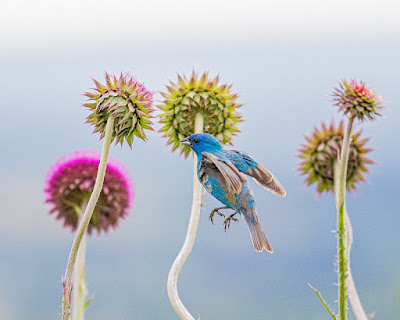
You can glimpse bald eagles nesting, self-heated skunk cabbage wildflowers that resemble Georgia O'Keefe paintings, perky kinglets that pop up their ruby-red crests when they're excited, sly foxes hunting for a mate, and many other winter wonders mentioned below.
It's enough to transform winter loathers into winter lovers.
You can glimpse bald eagles nesting, self-heated skunk cabbage wildflowers that resemble Georgia O'Keefe paintings, perky kinglets that pop up their ruby-red crests when they're excited, sly foxes hunting for a mate, and many other winter wonders mentioned below.
It's enough to transform winter loathers into winter lovers.
But before heading out on frosty trails, it's important to gear up and to prepare so you truly have fun and stay safe rather than just enduring an uncomfortable walk.
 Bring water, a snack, and a fully charged cell phone. Watch the radar with your own eyes and consult two different weather apps. Tell someone where you're going. Dress for 20° colder than it is, especially if you'll be standing around for more than 60 seconds. Wear layers. Feel fireplace-warm with a scarf, a hat, gloves, ear muffs, wool socks, and hand/toe warmers. If it's snowy, icy, or soggy wet, clip Yaktrax or similar cleats onto your waterproof shoes or consider Gore-tex boots or spiked trail-running shoes to stay warm and to prevent falling. Or grab your snowshoes or cross-country skis to discover more of winter's treasures.
There are also a slew of other benefits to winter treks, such as a shot of long-lasting energy, stronger muscles and bones, better cardiovascular health, and an uplifted soul.
Whose soul would not be inspired by watching colorful "snowbirds" that choose to winter in Virginia instead of Costa Rica, greenery that paints khaki forests with cheer, and Instagram-worthy views of landscapes and critters that are usually hidden by a tangled thicket of trees and shrubs? And did I mention that (virtually all) snakes and ticks are "sleeping"?

Some of my favorite winter birds are yellow-bellied sapsuckers (no, it's not a cartoon character), white-throated sparrows (they sometimes sound like computers), ruby-crowned kinglets and golden-crowned kinglets (my latest infatuation), red-breasted nuthatches (2021 is an irruption year), and dark-eyed juncos (I once saw a leucistic one). I also adore photographing wintering waterfowl like canvasback ducks with rusty red heads and bright red "vampire" eyes, elegant "super-model" tundra swans, chunky "boy-next-door" snow geese, and feisty American wigeon ducks with green-striped heads and squeaky voices.
You can pinpoint these birds' locations with the free eBird app and it can alert you to rarer visitors, like teensy but tough rufous hummingbirds. (One is visiting the Beatrix-Farrand designed Green Spring Gardens as of late December, 2020.) Free Merlin, Audubon, and other birding apps can help you identify your finds with photos, bird songs, territory maps, and more.

You'll know you've stumbled upon a sapsucker if you hear meow-like sounds and spot trees with perfect rows of square holes. Itsy-bitsy golden-crowned kinglets might flit down beside you to show off their sunflower-yellow crests. These and many other birds hang out in forests or at the forest edge, especially if it bumps into a meadow. It doesn't hurt if there's a creek, a waterfall, a bird bath, or another water source nearby. In Northern Virginia and throughout the DMV, you're never more than a mile from a "birdy" park or other public land. Winter ducks even promenade around the pond at Constitution Gardens near the U.S. Capitol. Red foxes also live on the National Mall, parading around at dawn and dusk before joggers and tourists scare them away. Red foxes are probably prowling through your own backyard or neighborhood park in the winter since it's their breeding season.
 And don't forget our common birds like fire-engine red northern cardinals (one of the most beautiful birds on the planet) that you can often see better without leaves obscuring your views. The more you notice about them, the more likely you'll fall in love. Relatively common birds like bald eagles and owls nest in the winter. Depending on the weather, Virginia's great horned owlets typically hatch in the winter. Fuzzy eaglets greet the world a tad later: by late winter or early spring. But if you're lucky, you might catch Ma and Pa Eagle adding new sticks to their massive nests in early winter and sitting on their eggs by February. Both of these big nesters live along the Potomac River in Arlington near Spout Run. Another eagles' nest flanks the main trail through the Dyke Marsh Wildlife Preserve. To find dozens of others in Northern Virginia, consult the Center for Conservation Biology’s unparalleled eagle nest map. Just don't venture closer than 330 feet to an active nest or the feds might swoop in to bust you for breaking the law since eagles are still protected.
At Dyke Marsh, you might also see barred owls "honeymooning" this winter. Babies come a bit later. This popular peninsula on the Potomac River attracts a great variety of birds year-round.
 Huntley Meadows Park is another "must see" bird hangout. Cute brown creepers with curved beaks spiral upward on tree trunks while northern pintail ducks dabble for dinner along the boardwalk of this locally famous wetland. If you're extra lucky, you might spy a common muskrat chomping on its leafy green dinner. In late February and early March, woodcocks perform spiral “sky dances” to lure mates.
Some parks, like Ellanor C. Lawrence Park, hang bird feeders, which makes it even easier to gawk at beautiful birds close-up. But you don't have to visit those hotspots for a bevy of birds. Just trek anywhere along Fairfax County's 40+ mile Cross County Trail and NOVA Park's 45-mile W&OD Trail to find these treasures. Before you go, open Fairfax County’s comprehensive “Trail Buddy” trail map in the free ArcGIS Explorer app and you’re all set. With that in your pocket, try going on an adventure alone one day. You’ll likely find more birds and critters. Or if you’re in a group, stop often to listen for sounds of life.
 Wherever you go, you might encounter rascally raccoons, acrobatic eastern gray squirrels (and maybe some black morphs), white-tailed deer, and perhaps even a Virginia opossum, North America’s sole marsupial. Salamanders and green treefrogs also stick around in the winter. Sometimes they’re no farther away than underneath a flat log or a hefty rock. It’s best to leave them slumbering. (Unless you’re conducting an iNaturalist bioblitz!) But thumb-nail sized spring peeper frogs will announce where they are in late winter with their deafening, high-pitched wailing.
Virginia's forests are dotted with green life all winter long. Clumps of American mistletoe are visible near the treetops. The white berries of this parasitic plant are poisonous for humans but a yummy snack for Cedar waxwings and other crayon-colored birds.

Lush Christmas ferns paint the forests a deep green hue. Light-green, yellow-green, and gray-green lichens light up trees and rocks. Bog clubmosses form a spongy green oasis on the ground. Invasive plants, such as English ivy, wind their way up trees. They're not good for the health of the trees, but birds and critters find them a warm and welcoming hideout. Pint-size partridge-berry plants (the Virginia Native Plant Society's "Wildflower of the Year" in 2012) and spotted wintergreen plants also decorate the dirt. The leaves of August-blooming Cranefly orchids stand out. They are green on top and plum-colored underneath.
Native and non-native flowers, berries, and seeds also brighten the winter woods. You can find
little white snow drops spreading along the ground; sunshine-yellow leatherleaf mahonia and winter jasmine; spiky apricot-colored and pale yellow witch hazel flowers; and ivory and pink hellebores; along with brick-red sumac seeds, shiny red American and Oriental bittersweet berries, beaming American red holly berries; and glowing red winter holly berries.
And all those eye-candy seeds and berries must taste like real candy to critters and birds. Maybe they like them so much that it has transformed them from winter loathers into winter lovers.